

Introduction
The champagne pops when the deal closes. Then everybody moves on to the next quarter's pipeline while the value of that hard-won signature quietly erodes. Not through cancellations or competitive losses, but through something far more mundane and pervasive: the billing engine never got the memo about what was actually signed.
For a B2B SaaS company doing $10 million in annual recurring revenue, even a routine 3% leakage rate equals $300,000 of contractually due revenue at risk, all of it vanishing after the contract is executed. That is not a pricing problem or a churn problem. It is an operational hemorrhage that lives in the gap between what the customer agreed to pay and what your finance team actually invoices.
The contract-to-cash workflow is the battleground where modern SaaS companies either compound their ARR or silently give it back, one missed escalation and unrecovered payment at a time. This article maps the precise failure points that create systemic leakage and lays out a diagnostic framework you can use to close them permanently.
Key Takeaways
Post-sales revenue leakage is not abstract margin erosion. It is contractually owed money that never reaches the bank, created by broken handoffs between the systems that hold your contracts, usage data, billing rules, and payment processing. The following five realities define both the problem and its resolution.
- Operational leakage is distinct from churn: Revenue leakage is contractually due revenue that fails to be billed, collected, or reconciled after the deal is signed. It is not voluntary downgrades, unsuccessful renewals, or competitive losses.
- Disconnected systems are the root cause: Manual handoffs between Salesforce, DocuSign, Stripe, and NetSuite introduce data latency and errors that create recurring billing failures, not one-off mistakes.
- A simple formula measures the damage: (Unbilled Contractual Revenue + Unrecovered Payments) divided by Total Contractual Revenue gives you a leakage rate you can track quarter over quarter.
- Product usage data is a financial instrument: High engagement signals expansion-ready accounts; declining feature adoption and login frequency are the earliest warnings of future churn, enabling intervention before billing events occur.
- A unified system of record is the structural fix: Automating the synchronization of contract terms, usage metering, billing rules, and payment recovery closes the control loop and makes leakage structurally impossible.
What Revenue Leakage Actually Means in B2B SaaS

Operational leakage hides in plain sight, disguised as a reconciliation discrepancy or a customer service follow-up. It needs a precise definition to separate it from the strategic revenue decisions your leadership team already debates.
| Dimension | Revenue Leakage | Voluntary Churn or Downgrade |
|---|---|---|
| Trigger | Failure to bill, collect, or reconcile contractually owed amounts | Customer decision to cancel or reduce spend |
| Root cause | Broken system handoff, manual error, or process gap | Product dissatisfaction, budget cuts, competitive pressure |
| Revenue status | Contractually due; the obligation exists on paper | No contractual obligation remains post-cancellation |
| Example | Price escalator clause ignored for 14 months | Customer switches to a lower-tier plan at renewal |
| Detection method | Contract-to-invoice reconciliation, payment failure logs | Churn reports, NPS surveys, renewal pipeline review |
| Owner | RevOps, Finance, Billing Operations | Customer Success, Sales, Product |
Revenue leakage in SaaS is the gap between what should have been billed and collected by a given date under signed contracts and what was actually billed and collected for those same obligations. It most often happens after a deal is signed and before cash is reconciled. The concrete examples make it tangible: a 7% annual price escalator that nobody programmed into the billing rules, overage fees for API calls that were tracked but never invoiced, an expired discount that kept applying because the CRM field did not update the billing system.
These are not edge cases. When a misconfiguration repeats, it compounds every billing period until a human finally notices, turning a January error into a December write-off.
The Main Sources of Post-Sales SaaS Revenue Leakage
Five categories of failure account for nearly all operational leakage between contract signature and cash reconciliation, each tracing back to a point where the digital customer representation diverges from the legal commitment:
- Contract terms not reaching billing system: The largest and most expensive gap occurs when a sales team closes a deal with custom payment terms, usage tiers, and a ramp schedule in Salesforce, but that data is manually transcribed into a billing platform, often by a different team looking at a PDF, not the CRM record, resulting in billing rules that lag the contract by weeks or remain permanently mismatched.
- Unbilled usage overages: These are generated by API calls, compute minutes, or storage that product telemetry records but the finance stack ignores.
- Incorrect discount renewals: Promotional rates hard-coded into a billing field persist past their scheduled expiration date, failing to expire on time.
- Missed price escalators: Often buried in multi-year agreements, these escape notice until a quarterly audit catches them months after the fact.
- Unrecovered payment failures: Involuntary churned credit cards, failed ACH transfers, and expired billing details sit in a collections queue that many SaaS finance teams lack the tooling to systematically work, as Quivly AI helps RevOps teams detect by connecting contract data with usage telemetry and billing events to surface accounts where contractual terms and collected revenue have diverged.
Why Disconnected Systems Are the Engine of Revenue Loss
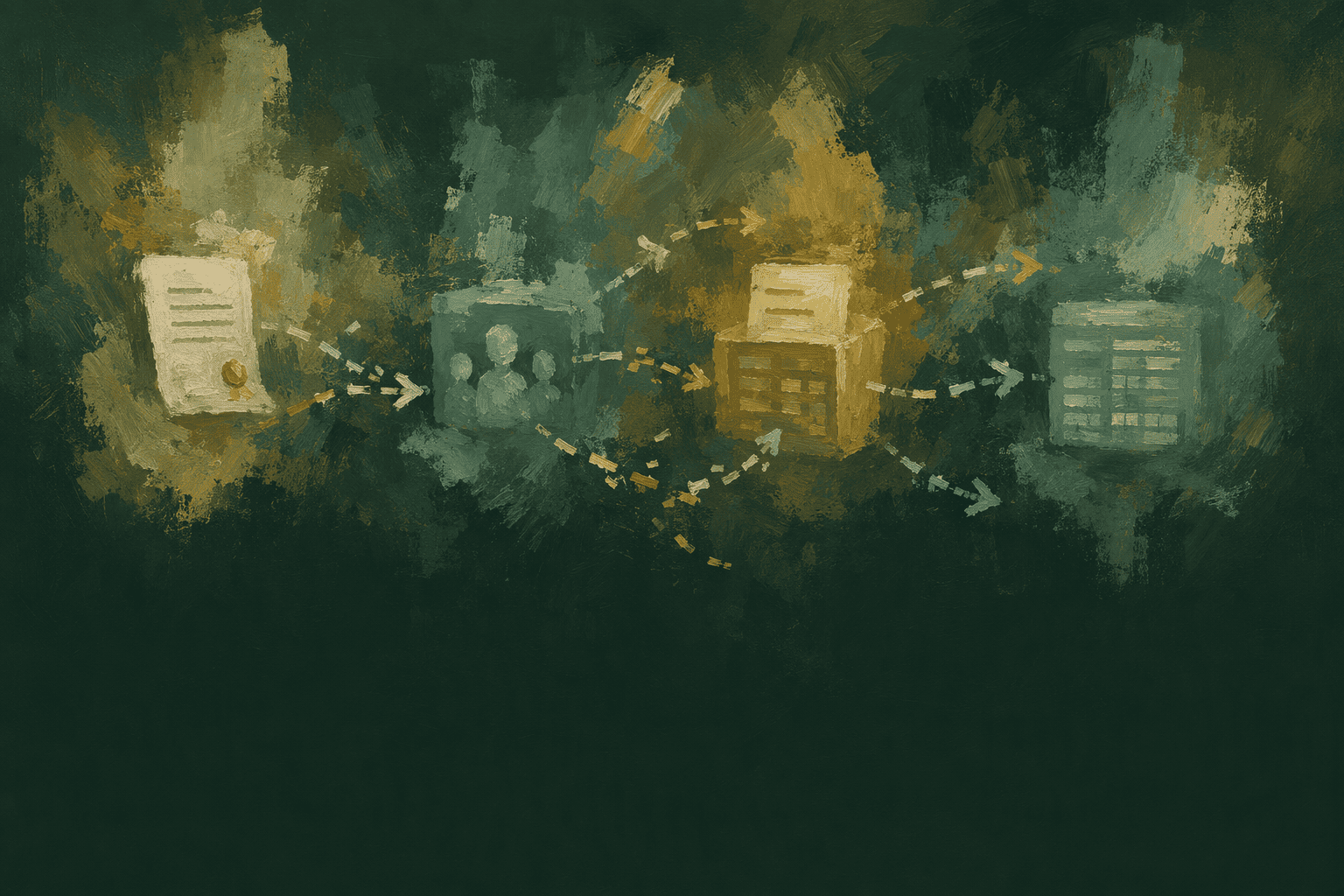
Each leak source in the previous section exists because your revenue operations run on a fragmented technology stack where no single system holds the authoritative truth. A contract lives in DocuSign, its structured terms sit inside a Salesforce opportunity object, the billing rules execute inside Stripe or a specialized billing platform, and the general ledger reconciles everything inside NetSuite.
This architecture creates a broken control loop. The contract sets intent, but the intent never directly governs the billing automation. Each manual handoff between these systems introduces latency, reinterpretation error, and decay.
By the time a discrepancy surfaces on a reconciliation report, the revenue is already lost and recovery requires a retroactive invoice that tests the customer relationship. The fragmentation itself is the structural root cause, not a series of one-off team errors. Every integration gap between CRM, CPQ, billing, and payments is a permanent leak point until a unified data layer closes it.
How to Quantify Your Leakage Rate (Formula and Benchmarks)

Revenue leakage stops being an abstraction the moment you assign it a number and a line item on a monthly operating review. The formula pulls two components from the systems you already run and divides them by total contractual revenue for the same period: (Unbilled Contractual Revenue plus Unrecovered Payments) divided by Total Contractual Revenue. You get a percentage you can track quarter over quarter and tie directly to a dollar amount.
For a $10 million ARR company, the math hits different. A 3% leakage rate equals $300,000 in revenue that was yours on paper but never hit the bank. That number is not a cost problem. It is a high-margin ARR gain your team can capture by closing the gaps, with no new sales required.
The numerator breaks into two buckets. Unbilled contractual revenue is the gap between what your CRM contract fields show and what the billing system actually generated for each customer. Every instance where the contract called for a higher amount sits in this bucket.
Unrecovered payments are the invoices that got generated correctly but never settled. You find those in payment gateway failure logs and collections reports. Most finance teams run this calculation for the first time and spot a number that surprises them.
The reconciliation demands a contract-level comparison that a standard month-end close skips entirely. Benchmark data is directional, not gospel, because leakage rates shift with billing complexity. A consumption-based pricing model creates more overage leakage than a simple seat-based subscription.
A multi-year agreement with escalator clauses needs more tracking than an annual contract. But 3% works as a starting hypothesis.
If your calculated rate comes in below it, check whether your numerator actually captures everything. If it lands above, you just wrote the business case for automation.
Leading vs. Lagging Indicators: Detecting Risk Before Revenue Disappears

MRR churn, downgrade revenue, and involuntary churn are lagging indicators. They measure damage that has already occurred, revenue your company already lost. These metrics tell you where you failed in the prior quarter with precision but provide zero forward guidance. Leading indicators are operational signals that predict future revenue loss before it materializes in your financial statements.
Declining product usage is the most predictive leading indicator you have, because it tracks actual customer behavior instead of survey sentiment or pipeline guesses. A drop in weekly active users, falling feature adoption, or fewer logins across a buying unit is strongly linked to future churn risk. Other early warnings include a first late payment, a spike in severity-level support tickets rather than feature requests, or a champion who stops replying to QBR invitations.
The diagnostic value kicks in when these weak signals cluster. A single missed login could mean someone took a week off.
That same missed login alongside a support ticket about a broken critical workflow and a late payment from the same account becomes a concrete risk score that asks for a response. A lone weak signal tells you nothing; it turns actionable only when it groups with another behavior anomaly.
The Role of Product Usage Data in Separating Expansion from Churn
Product usage telemetry is the only data source that reveals customer intent before a billing event forces the issue. Telemetry describes what the customer does inside the product, but on its own, it does not explain why engagement dropped. That requires correlation with other data streams like support tickets, NPS responses, and contract renewal timelines. When these data signals are brought together, usage data becomes the most reliable financial instrument in the post-sales stack.
High engagement accounts tell a growth story. If a team's weekly active users are rising, they are adopting features that address new workflows, and their API call volume is climbing past their current tier limit, you have an expansion-ready account that will absorb additional billing if you structure the upsell correctly. These are the accounts where unbilled usage should trigger a proactive commercial conversation, not a surprised invoice.
Declining engagement accounts tell the opposite story. A customer whose login frequency drops 40% month over month while support ticket volume climbs is signaling dissatisfaction that will eventually surface as churn or a downsell.
The value of usage data is that it lets you triage accounts before the renewal conversation. CS teams can route high-engagement, over-limit accounts to expansion workflows and declining-engagement accounts to rescue playbooks based on objective behavioral data rather than relationship intuition.
Quivly AI tracks product usage milestones, feature adoption gaps, seat utilization, and engagement trends across every account and can launch a rescue playbook automatically when it detects churn risk. The key is that the system provides signal, not noise, correlated weak signals that together produce an actionable risk score rather than a static dashboard KPI.
Building a Unified System of Record to Stop Leakage Systematically

The architecture that creates leakage has to be replaced by one that makes leakage structurally impossible. You need a unified system of record where the contract is the single source of truth. Every downstream system, billing, usage metering, collections, and reconciliation, executes against that truth without manual translation.
Implementation follows a logical sequence.
- Establish contract terms as the authoritative data layer: Extract structured terms from executed agreements and store them as machine-readable rules. This eliminates the gap between what was sold and what gets invoiced.
- Synchronize contract rules to billing automation: Feed those structured terms directly into the billing engine. Price escalators, discount expirations, and usage tiers update automatically on the dates specified in the agreement.
- Connect real-time usage metering to invoicing: Ingest product telemetry that tracks API calls, compute minutes, storage, and seat counts. Trigger billing events when usage crosses contracted thresholds, not when someone in finance runs a manual report.
- Build a closed-loop payment recovery engine: Automatically detect failed payments, route them through dunning and retry logic, and surface accounts where manual intervention is required. This turns unrecovered payments from an accepted loss into an operational workflow.
- Implement a correlation engine that scores risk across data sources: Correlate usage decline, support ticket spikes, late payments, and engagement gaps into predictive risk scores that trigger intervention playbooks before revenue is lost.
The goal is not to buy more software. It is to build automation that follows the contract faithfully, not the convenient billing shortcut. When the control loop is closed, the 3% leakage becomes an ARR gain rather than an annual write-off.
Conclusion
Revenue leakage is operational, not strategic, which means it is fixable. The path runs through measurement, triage, and architectural repair. Quantify your leakage rate with the formula. Use leading indicators and product usage data to separate expansion accounts from churn risks before billing events force the outcome. Then build the unified system of record that makes the handoff gaps disappear.
That $300,000 for the hypothetical $10 million ARR company is not a cost to be trimmed. It is high-margin revenue you already earned the hard way, by closing the deal. Closing the gap between contract intent and cash collection turns it into predictable, guaranteed ARR uplift in the very next quarter.
Frequently Asked Questions
Sources
- Trust Center - quivly.ai
- Revenue Leakage in SaaS: Why You're Losing 3–5% of ARR - www.ledgerup.ai


